
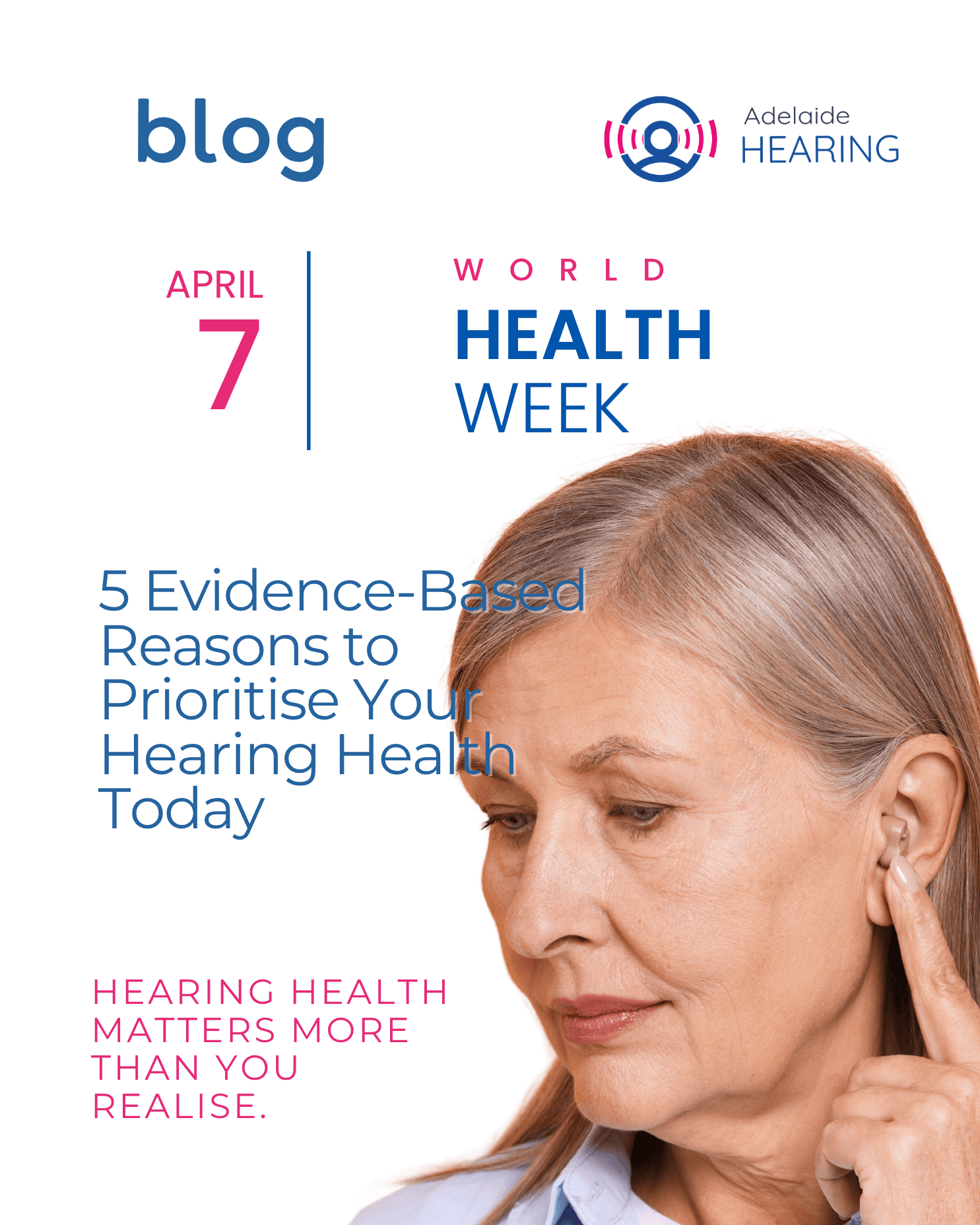
07 Apr World Health Day 2026 and 5 Evidence-Based Reasons to Prioritise Your Hearing Health Today
This World Health Day, themed “Together for Health. Stand with Science”, reminds us of the importance of evidence-based approaches when it comes to protecting long-term wellbeing and overall health, including hearing health, an integral, yet frequently overlooked component of that holistic picture.
In Australia, more than 3.6 million people currently live with hearing loss, a number projected to rise to approximately 7.8 million by 2060 according to Hearing Australia’s most recent data. Despite this prevalence, only around one in five individuals who would benefit from hearing aids currently use them. Untreated hearing loss is now recognised as the largest potentially modifiable mid-life risk factor for dementia, and contributes to increased cardiovascular strain, social withdrawal and diminished quality of life.
The scientific evidence is compelling, in that early intervention delivers measurable benefits across multiple facets of health. Below we take a deep dive into five key approaches that address hearing loss and supporting better outcomes for the heart, mind and everyday wellbeing.
Supports Cardiovascular Health. The microvascular systems that supply the inner ear are highly sensitive to cardiovascular changes. Declining low-frequency hearing is increasingly viewed as an early marker of conditions such as hypertension, diabetes and established cardiovascular disease. Australian epidemiological studies consistently demonstrate significant associations between these risk factors and diminished auditory function. By managing hearing loss and acting early, the additional physiological stress associated with effortful listening is reduced, in turn, helping moderate inflammation and support stable blood pressure.
Reduces Risk of Cognitive Decline and Dementia. Hearing impairment contributes approximately 7% to the population-attributable fraction of dementia in Australia – one of the highest proportions among modifiable risk factors. Landmark research, including the Lancet Commission reports, indicates that mild hearing loss is associated with up to a 71% increased dementia risk, with the figure rising substantially in cases of moderate to severe loss. Addressing hearing difficulties in mid-life has the potential to prevent or delay up to 8–9% of dementia cases, with effective amplification maintaining auditory stimulation, decreasing cognitive load from compensatory listening strategies, and helps preserve cognitive reserve.
Improves Mental Health Outcomes. Persistent communication challenges due to hearing loss are strongly linked to elevated rates of anxiety and depression.
A large-scale Tasmanian study involving more than 7,400 adults aged 50 and over, found that individuals with untreated hearing loss reported smaller social networks, significantly higher depression scores and greater feelings of isolation. Contemporary hearing solutions have been shown to reverse many of these effects, restoring confidence in social settings, reducing chronic stress and facilitating more positive emotional wellbeing.
Strengthens Social Engagement and Reduces Loneliness. Research shows that approximately one in six Australians aged 65 and older experiences loneliness, and hearing loss approximately doubles this risk. Difficulty participating in conversations often leads to gradual withdrawal from family interactions, community activities and professional settings. However, patients who adopt appropriate hearing technology frequently report renewed participation in social and recreational pursuits, resulting in stronger interpersonal connections, which in turn provide both emotional support and a protective buffer against further cognitive decline.
Enhances Independence, Safety and Quality of Life. Clearer hearing supports safer navigation of daily environments, for example, detecting traffic or household alarms, greater independence in personal and professional activities, and sustained engagement in later life. Research indicates that individuals who address hearing loss tend to report higher levels of life satisfaction, continued workforce or community involvement where desired, and lower overall utilisation of other healthcare services, outcomes that are consistent with effective, preventive health strategies.
This World Health Day presents a real opportunity to prioritise hearing as part of a comprehensive approach to long-term health. As an independent audiology practice, at Adelaide Hearing, our clinics in Torrens Park and Fulham Gardens provide comprehensive, obligation-free hearing assessments conducted by experienced clinicians, while offering the latest discreet hearing technology supported by 30-day, no-risk home trials.
To arrange your appointment, please contact us on 08 8357 2290, as early assessment and appropriate intervention can meaningfully improve health outcomes well into the future. At Adelaide Hearing, we remain committed to evidence-based care and to supporting South Australians in achieving clearer, healthier and more connected lives.